

You've got questions. We've got answers.
Payment Processing FAQ's
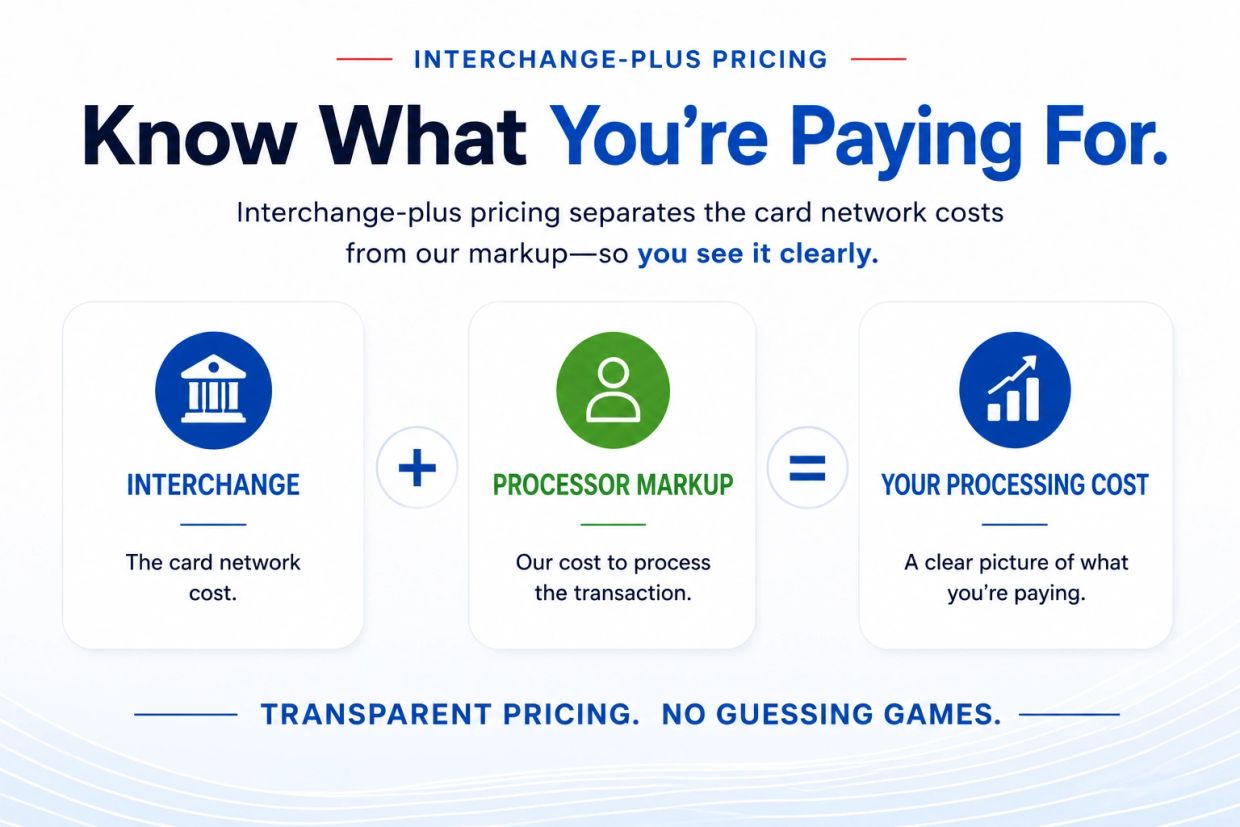
Interchange-plus is a transparent pricing model that separates the underlying interchange cost from the processor's markup. This makes it easier to understand what you're paying and how your processing costs are structured. Host Merchant Services uses interchange-plus pricing for its merchant accounts.
Flat-rate pricing combines processing costs into a single rate, while interchange-plus separates the actual interchange cost from the processor's markup. Because interchange rates vary depending on the card and transaction type, interchange-plus provides greater visibility into the true cost of each transaction.
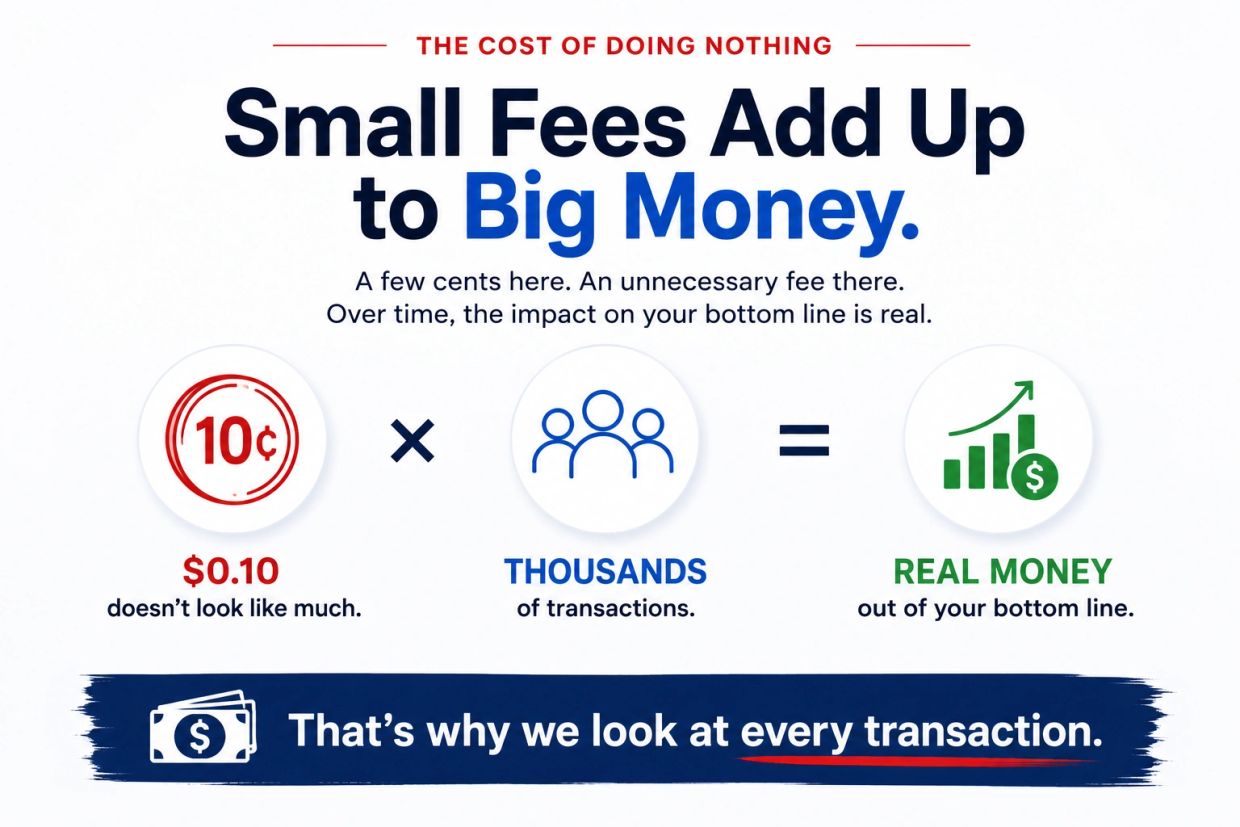
Yes. We'll help you review your current processing statement to better understand your rates and fees and identify areas that deserve a closer look. Our goal is to give you a clearer picture of what you're currently paying before discussing your options.
No. A processing statement review is simply an opportunity to better understand your current costs. After the review, you can decide whether making a change makes sense for your business.
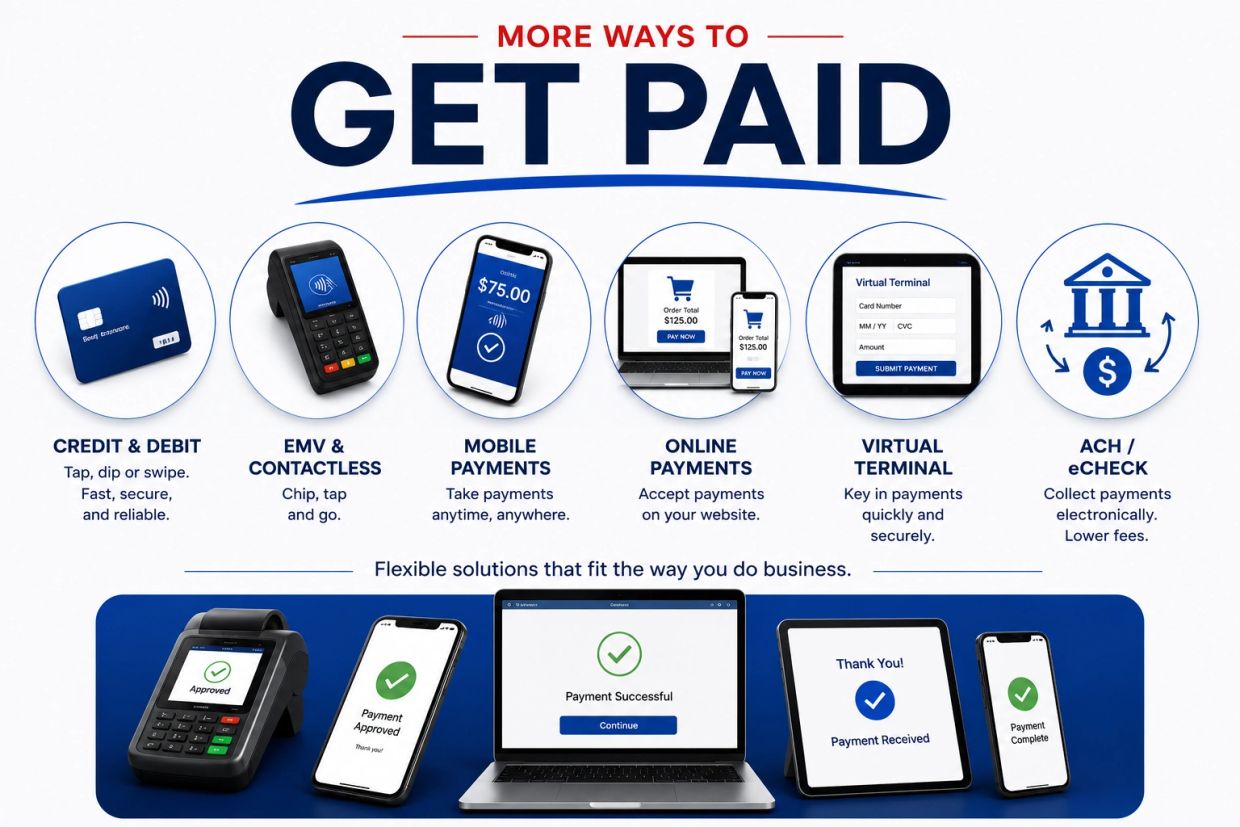
Yes. Depending on your business needs, payment solutions can include countertop and wireless terminals, mobile payments, e-commerce processing, payment gateways, virtual terminals, and other integrated options.
A virtual terminal allows authorized users to enter payment information securely through a web-based interface without requiring the customer's card to be physically inserted or tapped at a terminal. It's commonly used for phone orders, remote payments, and certain service businesses.
Yes. ACH and electronic check solutions may be available for businesses that want to accept payments directly from customers' bank accounts. Availability and the appropriate setup will depend on your business and processing requirements.
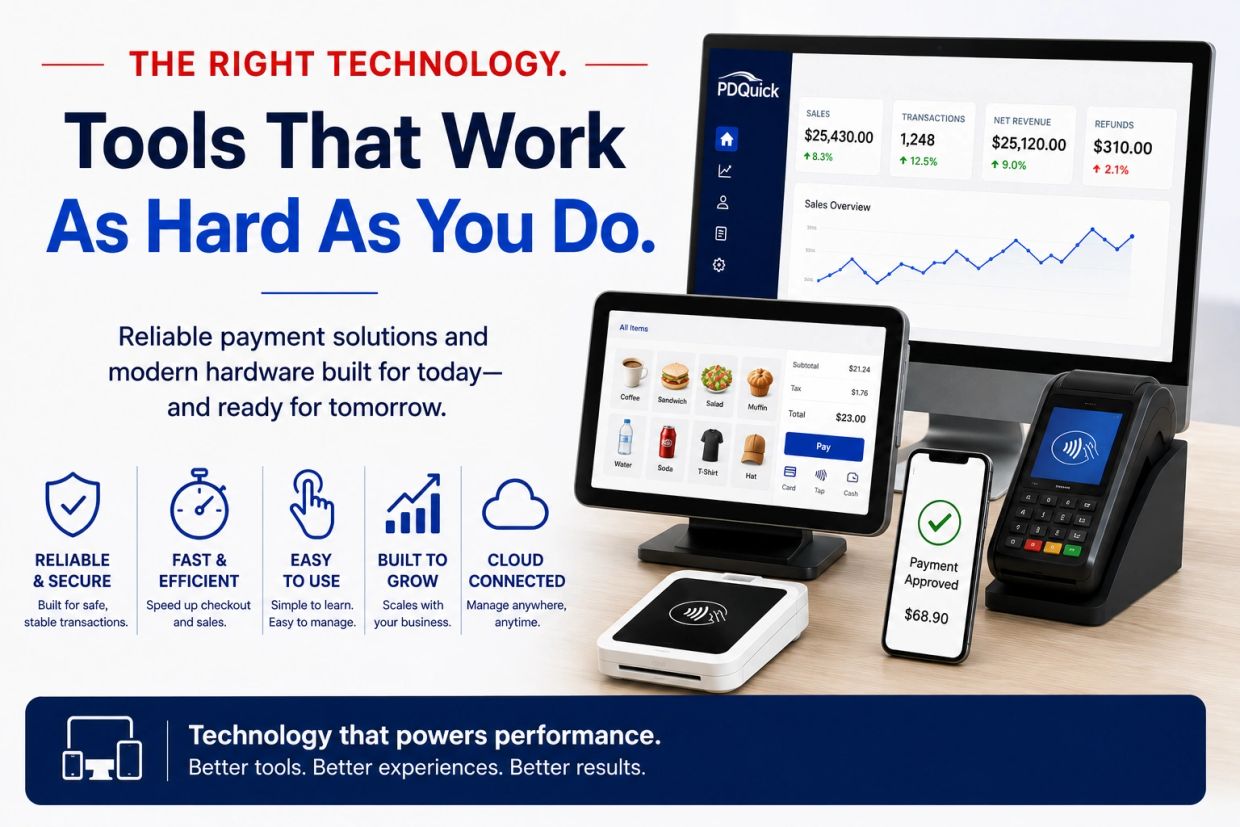
In many cases, yes. PDQuick offers access to payment solutions that can work with POS systems and other business technology. We'll help determine which integration options make sense based on the systems you use and how your business operates.
Not necessarily. Compatibility depends on your existing hardware, software, and processing configuration. We'll review what you're currently using before recommending new equipment. If your existing technology can be supported appropriately, we'll discuss those options with you.
Funding times depend on your merchant account, transaction timing, banking relationships, risk profile, and other factors. Next-business-day funding may be available for qualifying merchants. We'll explain the expected funding schedule before your account is established.
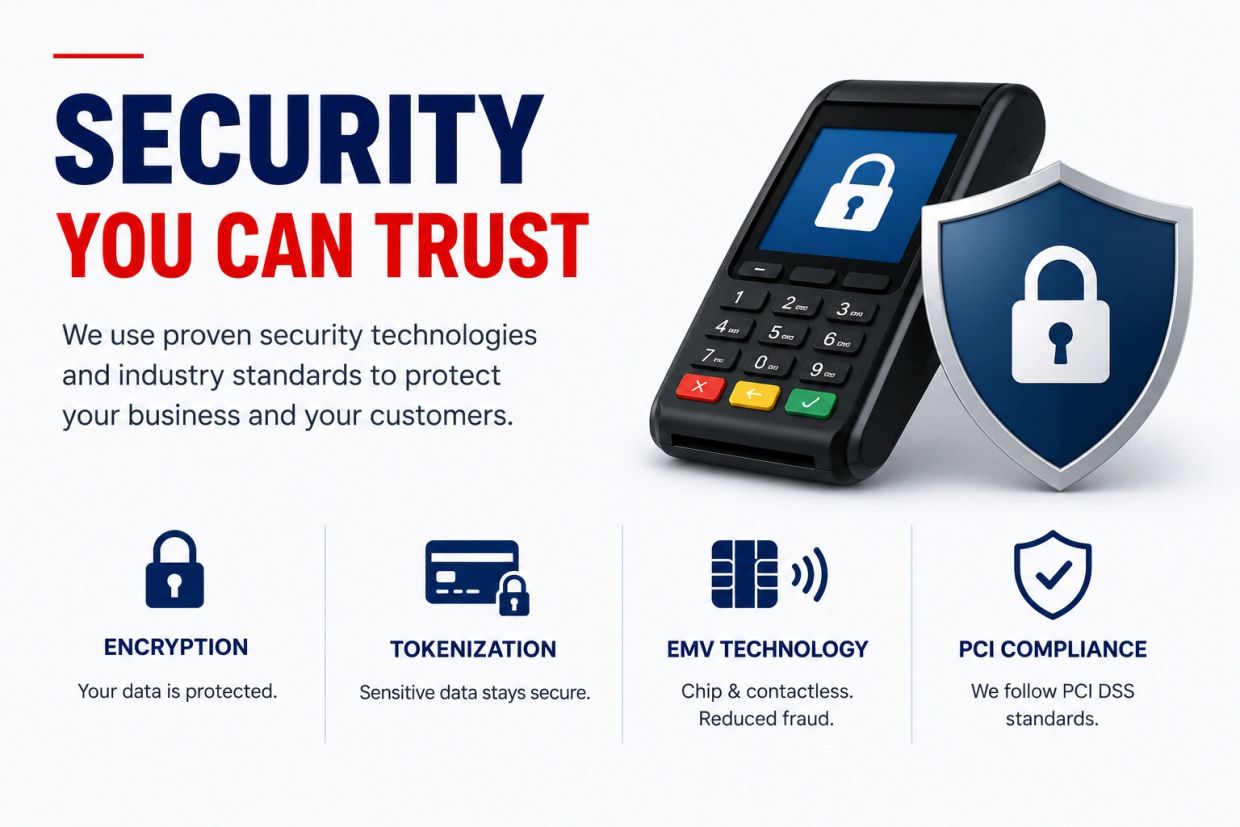
PCI DSS is a set of security standards designed to help businesses protect cardholder data. Maintaining compliance is an important part of accepting electronic payments securely. You'll be provided PCI compliance support, including assistance with questionnaires, scans, and compliance reminders.
Modern payment solutions may use technologies such as encryption, tokenization, EMV, and other security controls to help protect sensitive payment information. The specific security features available depend on the payment solution and how transactions are accepted.
A card-present transaction generally occurs when the payment credential is physically presented at the point of sale, such as through an EMV chip or contactless payment. Card-not-present transactions include many online, telephone, and manually entered payments. Because card-not-present transactions generally carry greater fraud risk, their interchange costs can be higher.
A disputed transaction may result in a chargeback. Proper documentation, clear refund policies, accurate billing descriptors, and fraud-prevention practices can help businesses manage disputes. Depending on the processing solution, additional chargeback management and fraud-control tools may also be available.
Yes. Depending on your business and payment platform, recurring billing options may be available for subscriptions, memberships, service agreements, and other repeat-payment models. We'll help determine the appropriate solution for your billing needs.
Yes. In many cases, the transition can be planned to minimize disruption. Before making a change, we'll review your current equipment, integrations, processing requirements, and any contractual obligations so you understand what's involved. It's also important to review your existing agreement for potential termination or other fees before switching.
That's where we come in. Instead of forcing every merchant into the same package, we look at how you accept payments, your transaction volume, average ticket, business environment, software needs, and future plans. Then we help you identify a solution that fits the way you actually do business.
Because payment processing should be about more than moving money from Point A to Point B. We focus on transparent pricing, technology that fits your business, straightforward answers, and a long-term partnership focused on your success.
Ready to Rescue Your EBITDA?
It Starts One Transaction at a Time. Let's take a closer look at your payment processing and see if there's a better way forward.

Get to know us. You'll be glad you did.
Call or text us: (855) "PDQuick" (855) 737-8425
Need support? Access the PDQuick Solutions Center to find a "how to" solution or start a support ticket.
Copyright © 2026 PDQuick Enterprises, LLC-All Rights Reserved. PDQuick is a proud partner/iso of host merchant services. The Apple Logo, Apple Pay and iPad are registered trademarks of Apple Inc. Google and the Google Logo are registered trademarks of Google Inc. © 2026 Google Inc.Clover trademark and the Clover Logo are registered trademarks of Fiserv Inc. All other trademarks, service marks and trade names referenced in this material are the property of their respective owners.
Powered by PDQuick Solutions®
- Home
- Payment Processing
- Dual Pricing
- ACH Payments
- eCommerce
- Software Integrations
- Loyalty & Gift Cards
- Healthcare Platform
- Online Ordering
- Event Manager
- Restaurant Manager (POS)
- Review Manager
- Time Manager
- Voice Manager (VOIP)
- Booking Manager
- Donation Manager
- Job Manager
- Rental Manager
- Studio Manager
- AI Manager
- Korona
- Clover
- Dejavoo
- Union POS
- Valor PayTech
- Star Micronics
- Pax
- Swipe Simple
- Support
- Contact Us
- Our Story
- Terms of Service
- Privacy Policy